
COLOMBO | NOVEMBER 6, 2026 | DWEEP TULIKA | HEALTH & PUBLIC HEALTH
By Dweep Tulika Editorial Desk
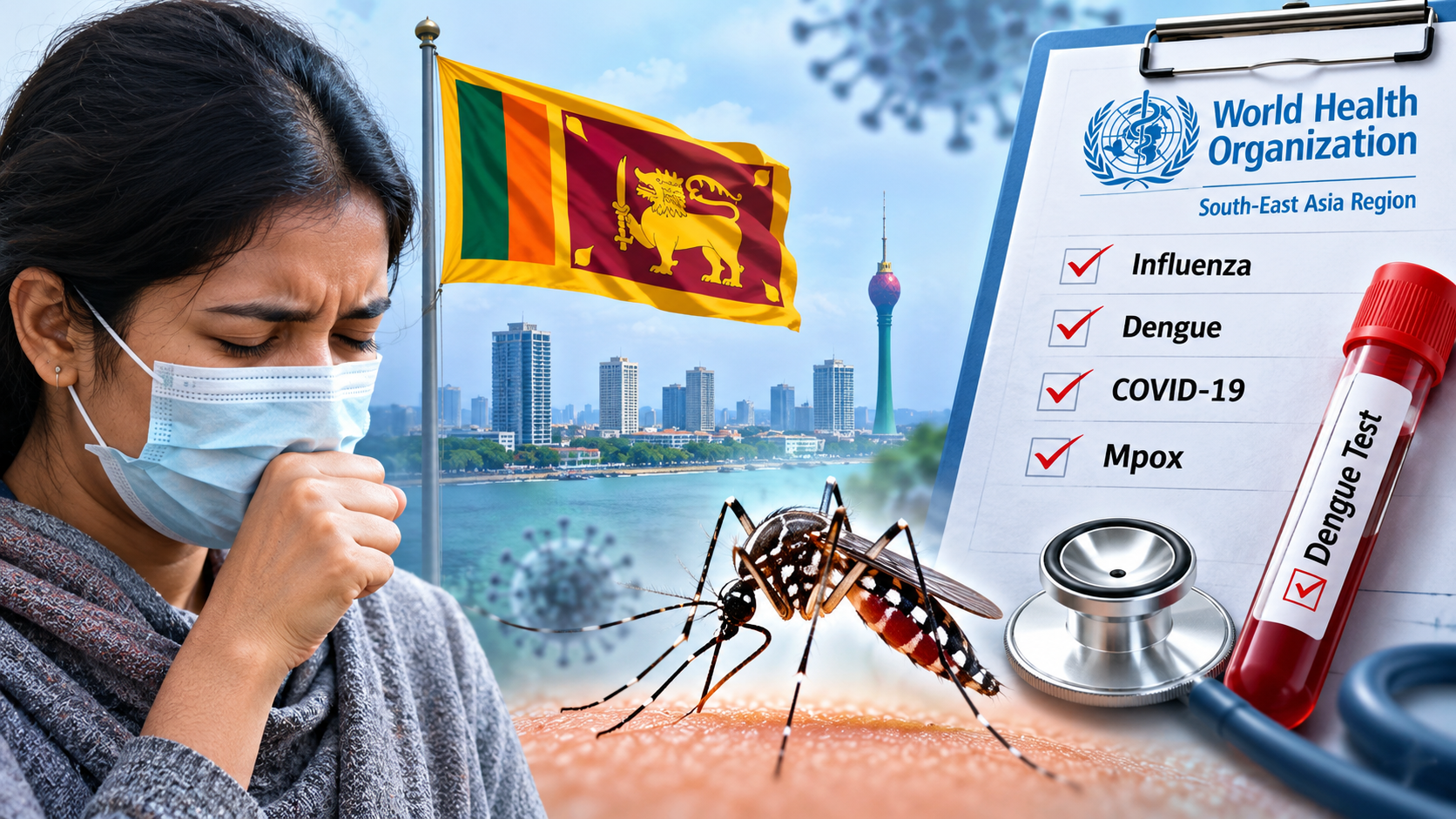
Sri Lanka is facing a significant infectious disease burden in 2026, with health authorities reporting increased influenza activity and more than one lakh dengue cases, according to national surveillance figures and international public-health updates.
The latest assessment published by the World Health Organization (WHO) on November 4, 2026, provides an overview of influenza, dengue, COVID-19 and other infectious diseases across the WHO South-East Asia Region, highlighting continuing public-health challenges in Sri Lanka and neighbouring countries, including India.
The WHO South-East Asia Epidemiological Bulletin, covering the period from October 19 to November 1, provides updated surveillance information and laboratory findings on infectious diseases circulating in the region.
Influenza Activity Increases in Sri Lanka
On October 15, Sri Lanka's Chief Epidemiologist, Dr Palitha Karunapema, reported an increase in influenza infections over the preceding three to four weeks.
Addressing a media briefing at the Health Promotion Bureau, the epidemiologist stated that approximately 35 per cent of samples tested during the preceding week had returned positive for influenza.
According to the health official, influenza was responsible for a considerable proportion of cough, cold and fever cases being reported through the country's surveillance system.
Most patients were expected to recover within three to four days with appropriate treatment. However, health authorities cautioned that certain groups, including pregnant women, young children, elderly people and individuals with underlying conditions such as diabetes, heart disease and kidney disease, could face a higher risk of complications.
The authorities advised people experiencing symptoms to rest, avoid unnecessary contact with others, maintain hand hygiene and wear face masks when infected to reduce transmission.
A separate report published by The Morning on October 18 also quoted influenza surveillance officials confirming that infections appeared to be increasing across the country.
WHO Identifies Influenza Strains Circulating in Sri Lanka
The WHO South-East Asia Epidemiological Bulletin dated November 4 provides further laboratory surveillance information.
According to data extracted from WHO's influenza surveillance platforms as of November 2, influenza A(H1N1)pdm09 accounted for 46 per cent of influenza-positive samples reported from Sri Lanka during epidemiological weeks 42 and 43.
Another 34 per cent of positive samples were classified as influenza A but had not been subtyped.
These figures describe the distribution of influenza-positive samples, not the percentage of Sri Lanka's population infected.
Across the WHO South-East Asia Region, 459 positive samples were recorded among 2,005 samples tested across eight reporting countries, representing an overall positivity rate of 23 per cent.
Influenza A accounted for 71 per cent of regional positive samples, while influenza B accounted for 29 per cent.
The findings demonstrate continuing influenza circulation in the region. However, the WHO bulletin does not identify a new influenza strain or declare a new regional influenza pandemic.
Dengue Remains a Major Public-Health Challenge
Alongside respiratory infections, dengue continues to place a considerable burden on Sri Lanka's healthcare system.
According to the National Dengue Control Unit's figures cited by Daily Mirror, Sri Lanka had recorded 106,421 dengue cases and 81 associated deaths by November 1, 2026.
The Western Province has remained among the most affected areas, with Colombo and Gampaha accounting for substantial numbers of reported infections.
The WHO's November 4 epidemiological bulletin separately reported 1,398 suspected dengue cases during epidemiological week 43, compared with 1,111 cases in week 42, representing a 26 per cent increase.
WHO noted that data for week 44 were not yet available for Sri Lanka at the time of publication.
The national cumulative figures and WHO's weekly suspected-case figures represent different reporting periods and surveillance measures and should not be treated as interchangeable.
Earlier, from August 11 to 13, Sri Lankan health authorities, with support from WHO, conducted the National Dengue Review 2026 to assess the outbreak response and identify areas requiring stronger surveillance and prevention.
The review highlighted the importance of timely case investigations, improved laboratory capacity, vector surveillance, community participation and effective coordination between health authorities.
WHO also noted that heavy rainfall, environmental conditions, urbanisation, population movement and mosquito breeding sites contribute to dengue transmission.
The organisation continues to support Sri Lanka's Ministry of Health and National Dengue Control Unit in strengthening surveillance, laboratory systems, clinical management, vector control and outbreak preparedness.
India's Disease Surveillance: Dengue and Influenza Trends
The WHO bulletin also provides relevant information about infectious diseases in India.
According to the report, India recorded 23,470 dengue cases during September 2026, representing a 72 per cent increase compared with August, when 13,610 cases were reported.
The cumulative number of reported dengue cases in India reached 70,140 by September 2026, compared with 68,356 during the corresponding period in 2025.
The bulletin also examined influenza activity in India. Among countries reporting at least ten influenza-positive samples, influenza B predominated in India, accounting for 53 per cent of positive samples during the reporting period.
Separately, India's Ministry of Health and Family Welfare issued a statement on August 25, 2026, confirming that seasonal influenza trends were being monitored through a nationwide surveillance network involving the Department of Health Research, Indian Council of Medical Research and National Centre for Disease Control.
The ministry stated that the H1N1 viruses circulating in India were consistent with expected seasonal patterns and that genomic surveillance had not identified an unusual genetic shift or a new influenza strain.
The statement also referred to the network of 73 Department of Health Research–ICMR Virus Research and Diagnostic Laboratories monitoring circulating respiratory viruses.
WHO Strengthens Regional Disease Surveillance
The November 4 epidemiological bulletin is part of WHO's continuing regional surveillance programme, which publishes updates every two weeks to inform public-health risk assessment and response.
The publication covers key infectious diseases across the WHO South-East Asia Region and draws on publicly available national surveillance information.
Apart from influenza and dengue, the latest edition includes updates on COVID-19 and mpox.
WHO reported that no new mpox cases were recorded in the South-East Asia Region during epidemiological weeks 43 and 44. However, the bulletin continued to track previously reported cases, including Clade Ib infections in the region.
The organisation's surveillance work is intended to help countries identify changes in disease activity, assess emerging risks and strengthen preparedness.
Public-Health Preparedness Remains Important
The latest surveillance information indicates that dengue and influenza remain significant public-health concerns in Sri Lanka, while India is also monitoring seasonal respiratory infections and mosquito-borne diseases.
Health authorities continue to emphasise early diagnosis, timely medical attention, laboratory surveillance, vector control and public awareness as important components of infectious disease prevention.
For communities, preventive measures such as eliminating stagnant water, maintaining clean surroundings, using mosquito protection and practising respiratory hygiene remain important.
As disease patterns change with seasonal and environmental conditions, regular surveillance and coordination between healthcare institutions remain essential to identifying emerging risks and responding effectively.
Sources and references:
- World Health Organization – South-East Asia Epidemiological Bulletin, 22nd Edition, November 4, 2026: https://cdn.who.int/media/docs/default-source/searo/whe/wherepib/2026_22_searo_epi_bulletin.pdf
- WHO – National Dengue Review 2026, Sri Lanka, August 14, 2026: https://www.who.int/srilanka/news/detail/14-08-2026-national-dengue-review-2026-identifies-priorities-to-strengthen-sri-lanka-s-dengue-preparedness-and-response
- Sri Lanka National Dengue Control Unit: https://www.dengue.health.gov.lk/
- The Morning – Health: Influenza cases on the rise nationwide, October 18, 2026.
- News 1st – Sri Lanka Sees Increase in Influenza Infections, October 15, 2026.
- Government of India, Press Information Bureau – Government Closely Monitoring Seasonal Influenza Trends Across the Country, August 25, 2026: https://www.pib.gov.in/PressReleaseIframePage.aspx?PRID=2303208
This report is based on published national surveillance figures and WHO regional epidemiological updates. Figures represent the reporting periods and classifications specified by the respective sources.