
SRI VIJAYA PURAM | NOVEMBER 7, 2026 | DWEEP TULIKA | DIGITAL REPORT
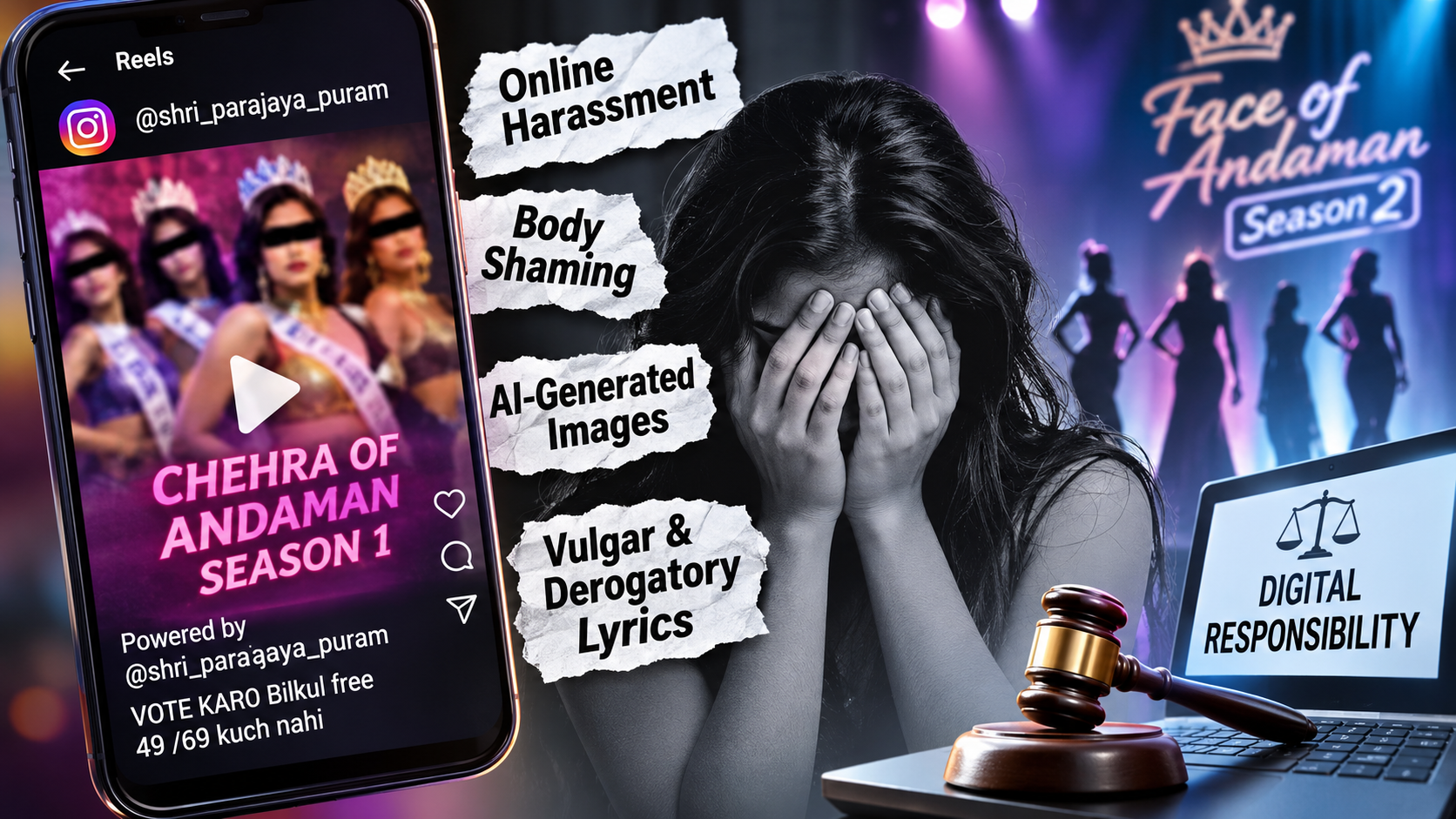
An Instagram reel targeting contestants associated with Face of Andaman has raised concerns over online harassment, body shaming and the misuse of artificial intelligence to create humiliating social media content in the Andaman and Nicobar Islands.
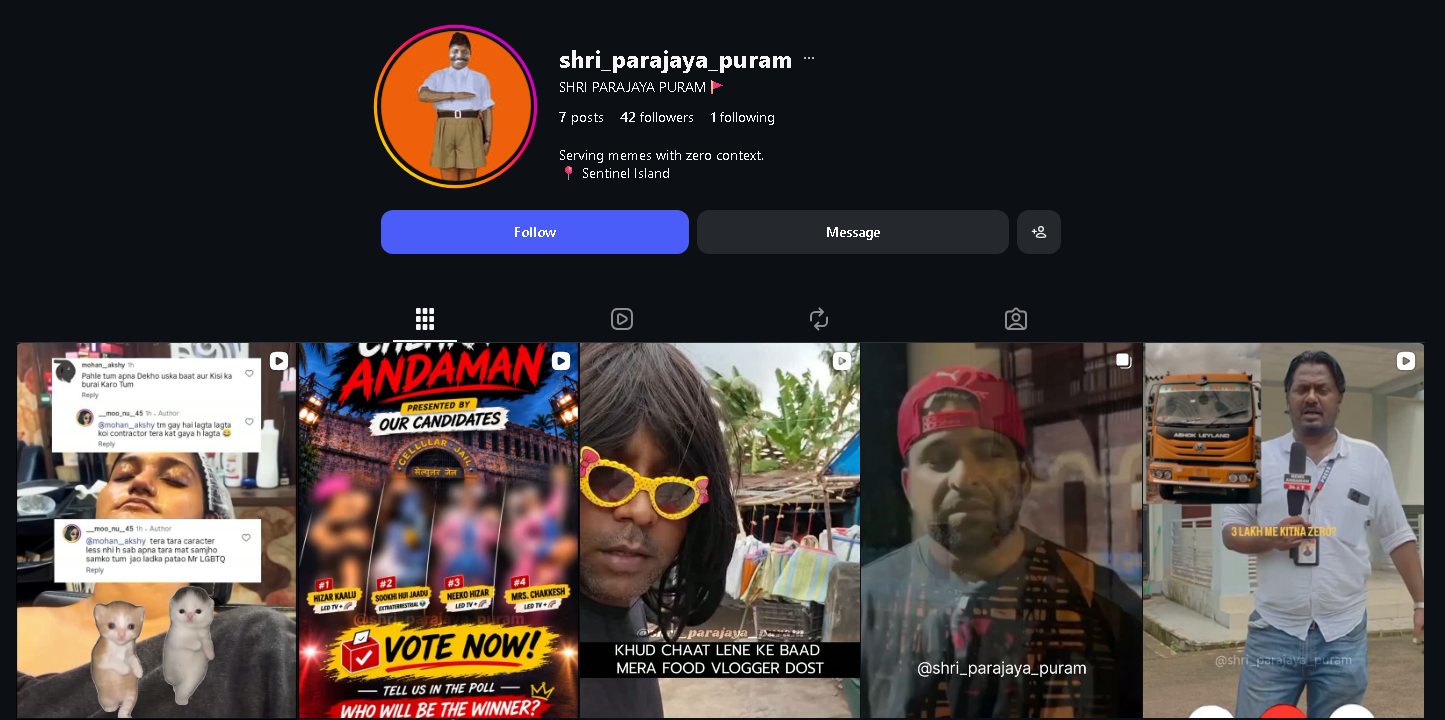
The controversy comes shortly after the conclusion of Face of Andaman Season 2. The reel at the centre of the controversy was published by an Instagram account operating under the username @shri_parajaya_puram.
Interestingly, the accompanying caption uses the title "CHEHRA OF ANDAMAN SEASON 1", followed by "Powered by @shri_parajaya_puram" and "VOTE KARO Bilkul free 49 /69 kuch nahi".
The reel combines AI-generated images depicting contestants in inappropriate ways with an AI-generated song containing vulgar and derogatory lyrics. The content appears to use a mock competition and voting format while simultaneously ridiculing individuals associated with the event.
AI-Generated Song Uses Vulgar and Derogatory Language
The song featured in the reel repeatedly references Face of Andaman and uses sexually vulgar expressions to ridicule people associated with the event.
Among its lyrics are derogatory references to contestants' perceived identities and gender expression. One portion uses the expression "ladkiyon ke vesh mein hai darinda", while another contains sexually explicit language directed at people who respond to comments.
The lyrics also question the contestants' recognition, identity and public standing.
Rather than limiting itself to criticism of the event, its organisers or its selection process, the content appears to direct ridicule towards the individuals participating in it.
The use of AI-generated imagery alongside the song adds another dimension to the controversy, particularly if identifiable contestants have been depicted in manipulated and degrading situations.
Mahi Questions the Targeting of Contestants

Responding to the controversy, Andaman-based digital content creator, lifestyle blogger and dancer Jasmin Nisha, popularly known as Mahi, published a video expressing strong objections to the trolling of contestants.
In her video, Mahi said she was deeply disturbed after watching the content and questioned why individuals participating in a show were being targeted over their appearance, body shape and personal identities.
She clarified that she herself was not a supporter of Face of Andaman or other local shows. However, she argued that disliking an event did not justify humiliating its participants.
According to her, criticism should be directed towards the organisers if people have concerns about the credibility, functioning or standards of an event.
Her central question was simple: What is the fault of the contestants?
Shares Her Own Experience of Trolling
Mahi also connected the incident to her personal experiences with online trolling.
She said she had faced similar treatment several years ago and claimed that the experience affected her life for nearly four years.
Describing the possible emotional consequences, she said that people creating mocking videos might enjoy the attention and engagement they receive, but the individuals being targeted could continue to suffer long after the videos have circulated.
She expressed concern that repeated humiliation could damage someone's confidence, discourage them from pursuing their ambitions and eventually force them to withdraw from public platforms.
Her video also highlighted the targeting of LGBTQ+ individuals, questioning why their identity or gender expression should become a reason for public ridicule.
Questions Over the Role of Social Media Users
Another aspect raised by Mahi concerns the role of people who share or reproduce trolling content while claiming to support those being targeted.
She pointed out that supportive videos sometimes incorporate clips, songs or references from the original offensive material, inadvertently increasing its reach and visibility.
She questioned whether such practices genuinely help affected individuals or instead contribute to making the offensive content more widely circulated.
Mahi also referred to what she described as a broader culture of online ridicule in the islands, where individuals creating content, sharing family moments, appearing in fashion shows or pursuing creative interests can become targets of mocking videos and comments.
She urged social media users to reconsider the consequences of their online behaviour.
Criticism Is Different From Personal Harassment
The controversy raises an important distinction between legitimate criticism and targeted humiliation.
Public events, including fashion shows and personality competitions, are open to criticism. Questions concerning their organisation, selection procedures, judging standards, transparency and credibility are legitimate subjects of public discussion.
However, targeting individual participants through sexually degrading language, body shaming or manipulated imagery is a different matter.
The use of artificial intelligence does not automatically make such content harmless or exempt it from scrutiny. Where manipulated images are used to humiliate identifiable individuals, questions concerning consent, privacy, dignity and potential legal remedies may arise, depending on the nature and context of the material.
The identity of the person operating the Instagram account has not been independently established. The account's public profile and publishing history would need to be examined before drawing conclusions about its operator or intentions.
A Larger Question About Digital Responsibility in the Islands
The incident has brought forward broader questions about responsible social media behaviour in a relatively small community such as the Andaman and Nicobar Islands.
For aspiring dancers, performers, models and digital creators, social media can provide opportunities to showcase their abilities and reach wider audiences. At the same time, the circulation of humiliating content can expose individuals to public ridicule and discourage participation in creative and cultural activities.
The growing accessibility of AI-generated songs and images makes this concern particularly relevant. Content that once required considerable technical effort can now be produced and circulated rapidly, making responsible use of these technologies increasingly important.
Mahi's intervention brings a personal perspective to this debate. Her central argument is not that Face of Andaman or its organisers should be protected from criticism, but that contestants should not be humiliated simply for participating.
An event can be questioned, its organisers can be criticised and its standards can be debated. But a person's appearance, identity and dignity should not become material for public humiliation.
Editorial clarification: This report is based on the supplied video transcription, caption and Mahi's video statement. The original account operator's identity, the circumstances surrounding the creation of the AI-generated images and any formal complaints or responses from the affected contestants and organisers have not been independently verified.