
MUMBAI | OCTOBER 21, 2026 | DWEEP TULIKA
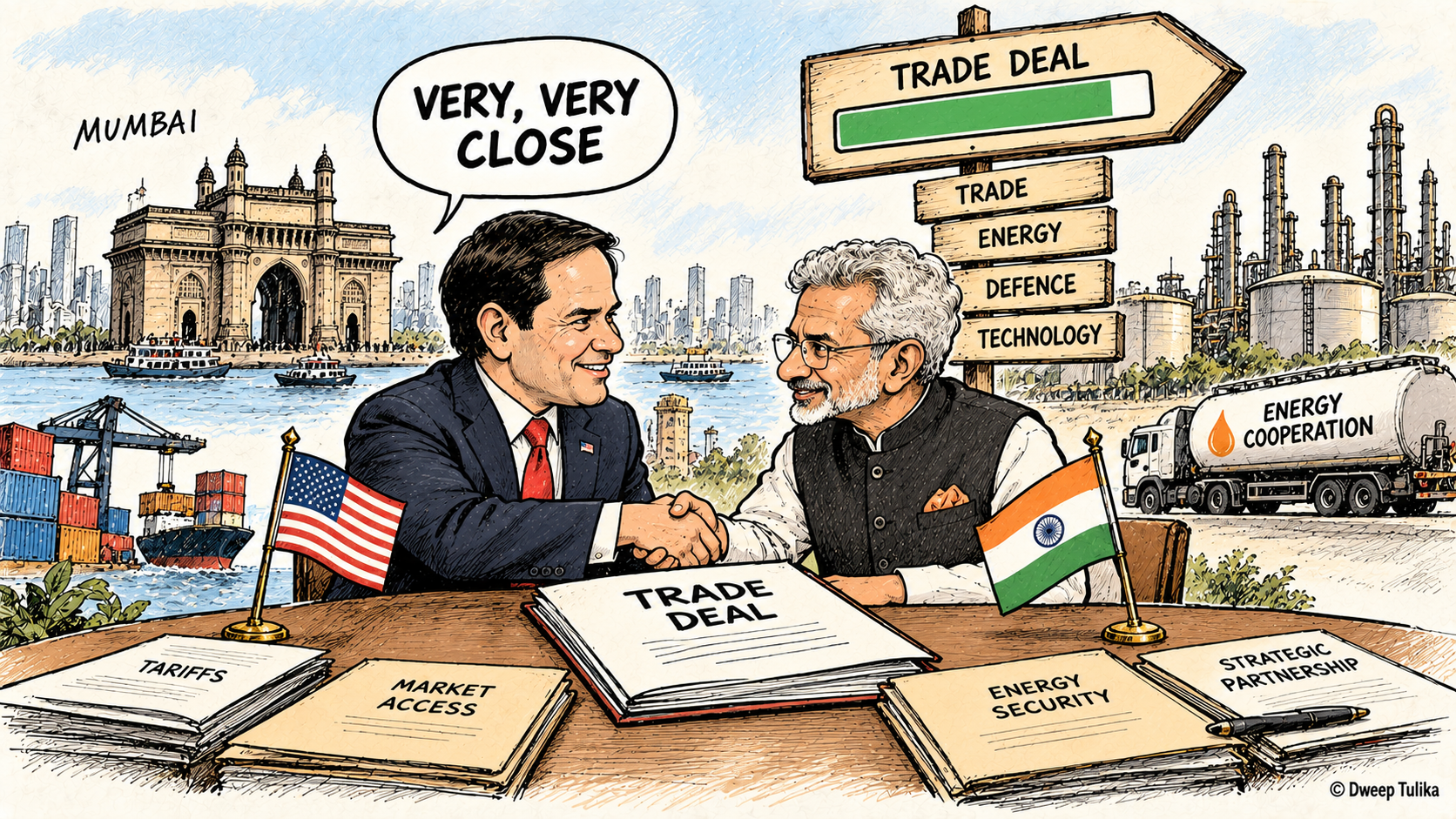
The United States has expressed optimism about concluding a long-pending trade agreement with India, with US Secretary of State Marco Rubio saying the two countries are “very, very close” to finalising the deal following his meeting with External Affairs Minister S. Jaishankar in Mumbai on October 20.
Rubio said only a small number of issues remained to be resolved and expressed hope that an announcement could be made soon. However, no signed agreement had been announced at the time of his remarks.
The discussions between Rubio and Jaishankar covered trade, energy security, defence, technology and the wider strategic partnership between the two countries. They also exchanged views on regional and global developments, including the situation in the Middle East.
Energy Cooperation Takes Centre Stage
Energy security was a key subject during Rubio’s India visit. Washington has encouraged New Delhi to expand energy trade with the United States and diversify its sources of supply.
Rubio highlighted India’s extensive oil-refining capabilities and discussed opportunities for Reliance Industries to refine more Venezuelan crude. Reuters reported that he also planned to encourage the company to consider potential opportunities related to oil production in Venezuela.
The discussions come amid continuing uncertainty in global energy markets and concerns over supply disruptions. India’s refining capacity gives it an important role in processing crude from different sources, depending on commercial considerations, refinery requirements and the availability of supplies.
Rubio’s planned engagement with Reliance’s Jamnagar refinery in Gujarat was another element of the energy discussions. The refinery complex is a major part of India’s petroleum-processing industry and a potential focal point for discussions on energy supply and commercial cooperation.
Trade Negotiations Near a Crucial Stage
The proposed India–US trade agreement has been under negotiation amid disagreements over tariffs, market access and energy policies.
Rubio’s latest remarks followed earlier expressions of optimism from US Ambassador to India Sergio Gor, who said major elements of the negotiations had been addressed, although outstanding details still needed to be resolved.
US President Donald Trump has also indicated that the two countries are close to reaching an agreement. The positive statements suggest progress in negotiations, but they do not establish that all terms have been settled.
The final outcome will depend on resolving the remaining issues and completing the necessary formal processes. Until both sides announce an agreement, the timing, scope and final terms remain uncertain.
Broader Strategic Partnership
Beyond trade, the Mumbai meeting reflected efforts by New Delhi and Washington to strengthen cooperation in energy, defence and technology.
According to the US State Department’s account of the meeting, Rubio and Jaishankar discussed regional and global issues, energy trade, defence and civil-nuclear cooperation, as well as the potential for India to increase purchases of US technologies and systems.
These discussions take place against a wider backdrop of economic and strategic ties, including differences over tariffs and India’s energy imports. Both governments have incentives to explore areas of cooperation while working through outstanding disagreements.
What Happens Next?
Rubio’s comments have raised expectations that negotiations could move towards a conclusion in the near term. However, his remarks also made clear that some issues remained unresolved.
A completed agreement would require both governments to settle the outstanding terms and announce the outcome through the appropriate channels. Until then, the proposed trade deal remains under negotiation.
For now, the main development is the renewed public indication from Washington that discussions are nearing completion. Whether that optimism translates into a signed agreement will depend on the next steps in negotiations between the two countries.