
NEW DELHI, October 15, 2026:
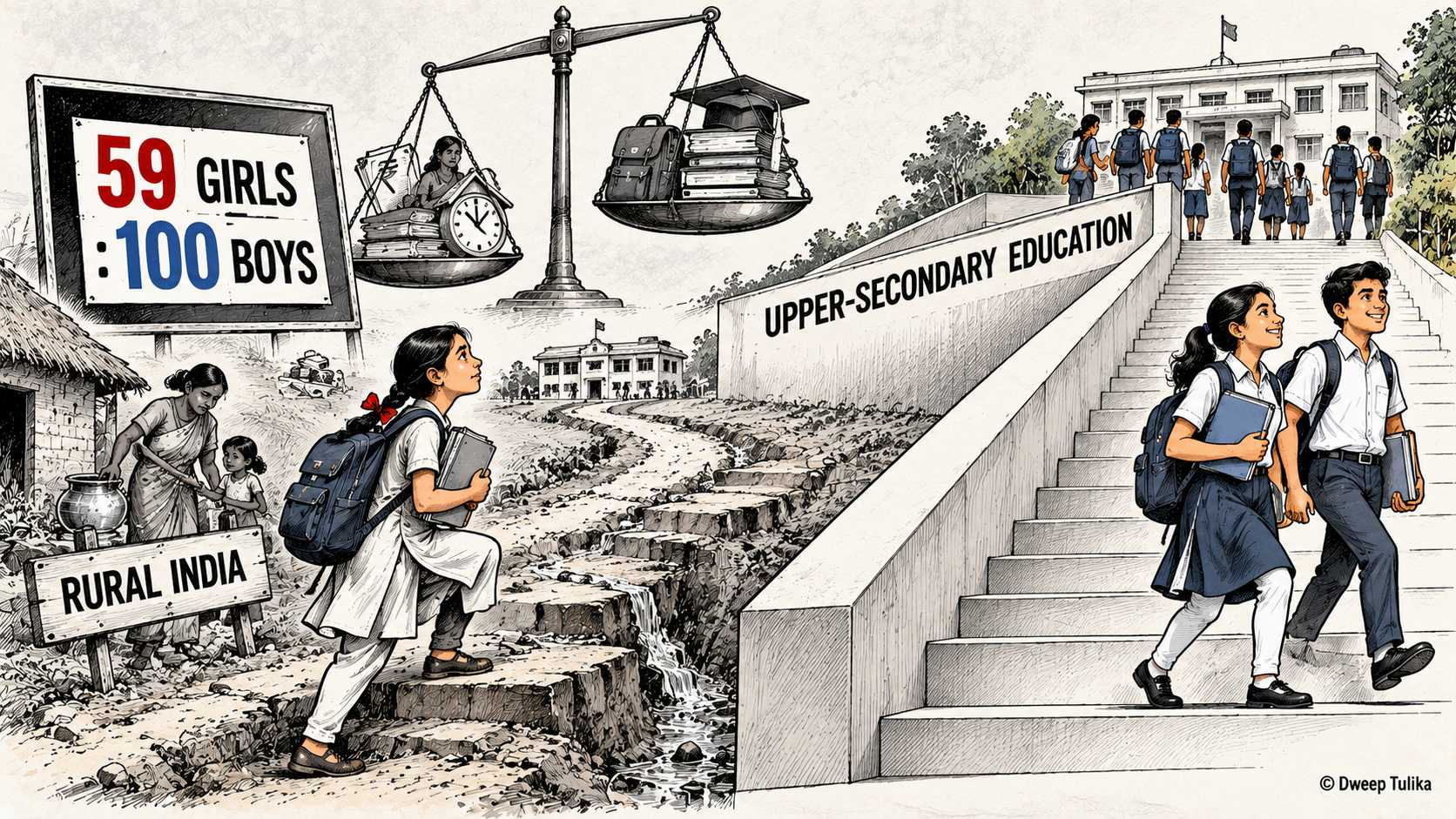
Only 59 girls complete upper-secondary education for every 100 boys in rural India, highlighting a significant gender gap in educational outcomes despite the country's broader progress towards gender parity, according to UNESCO's 2026 Global Education Monitoring (GEM) gender report.
The report, titled Gender Equity in Access to Education, reveals a sharp contrast between rural and urban India. While gender parity in upper-secondary completion has been achieved in urban areas, girls in rural areas continue to face substantial disadvantages in completing their schooling.
India's overall gender parity index for upper-secondary completion stands at 0.89, meaning that approximately 89 girls complete this level of education for every 100 boys. In rural areas, the index falls to 0.59, underscoring the extent of the disparity.
The findings demonstrate how national-level progress can conceal inequalities affecting specific communities. Although India has made significant progress in narrowing the gender gap, educational outcomes remain uneven across geographical and socioeconomic groups.
Rural girls face greater barriers
The UNESCO report examines how factors such as household wealth and geographical location influence educational opportunities. Its findings indicate that girls from disadvantaged backgrounds can face additional obstacles in accessing and completing secondary education.
Financial constraints, social expectations, early marriage, pregnancy and care responsibilities can affect girls' ability to continue their education. The report stresses that addressing these challenges requires coordinated action rather than relying on a single intervention.
The rural-urban divide in India illustrates why improvements in overall educational indicators do not necessarily translate into equal opportunities for every girl.
Progress does not mean equality for all
UNESCO's findings also point to the importance of distinguishing gender parity from broader educational equity. A national indicator can improve even when some groups continue to experience serious disadvantages.
The report calls for policies that address financial, social and educational barriers, particularly for learners who are furthest behind. Measures highlighted by UNESCO include financial assistance for disadvantaged students, safe transport, accessible schools, adequate sanitation facilities, prevention of child marriage and opportunities for young mothers to continue their education.
Evidence cited in the report also indicates that school meals and appropriate sanitation facilities can help improve girls' participation in education.
A continuing challenge for India
The figure of 59 girls for every 100 boys in rural India raises important questions about whether educational opportunities are reaching girls equally across the country.
Achieving gender equality in education requires more than enrolling girls in school. It also requires ensuring that they can remain in education, progress through the secondary grades and complete their schooling.
UNESCO's findings underline the need for closer attention to rural and economically disadvantaged communities, where the benefits of national progress may not be shared equally.
The report makes clear that closing the remaining gap will require sustained efforts to remove the barriers preventing girls from completing their education.
Source: UNESCO, Gender Equity in Access to Education, 2026 Global Education Monitoring Report.
For publishing and other essential package along with caricature prompt