
For the residents of Borang, a remote settlement under Mayabunder Gram Panchayat in North and Middle Andaman, the struggle for basic infrastructure is not a recent grievance. It is a continuing problem that has travelled through multiple levels of administration, reached the Member of Parliament and the Chief Secretary, prompted visits by district officials and now reached the Lieutenant Governor through the Janta Darshan held on October 30, 2026.
The story of Borang is particularly significant because its residents are not describing a newly established settlement awaiting initial development. The village's settlement history, as conveyed for this investigation, dates back to 1974, when the first 16 families were allotted land. Another 16 families received allotments in 1978, taking the total to 32 families.
More than five decades after the first allotments, residents continue to raise questions about their access to safe drinking water, permanent road connectivity, healthcare, education, mobile network coverage, electricity-related facilities and the resolution of their settlement matters.
The issue is no longer simply about the absence of infrastructure. It is about what happened to a grievance after it was repeatedly brought to the attention of the authorities.
A government settlement, but where is the supporting infrastructure?
According to the information provided by the villagers, Borang was settled in two phases:
1974: Allotment to the first 16 families.
1978: Allotment to another 16 families.
The total number of families covered by these allotments was 32.
The September 12, 2025 representation submitted by Member of Parliament Bishnu Pada Ray to the Chief Secretary also referred to 32 families and approximately five hectares of allotted land. However, that letter described the settlement period as between 1970 and 1974.
This creates a documentary discrepancy between the chronology supplied by the villagers and the summary contained in the MP's letter. The original family-wise allotment orders, pattas and Revenue Department registers would be the appropriate records to establish the precise dates.
The distinction is important because the present grievance is not limited to development works. The villagers have also been seeking clarity and resolution concerning their settlement-related rights.
The North and Middle Andaman district administration's official website lists Borang among the villages of Mayabunder Tehsil, confirming its recognition in the district's administrative village directory.
Yet, the existence of a village in the administrative records has not, by itself, translated into the level of physical connectivity and essential services its residents require.
The journey from a 2023 grievance to the Lieutenant Governor
The matter was first taken up by K. Vishwanathan, associated with the Cockroach Janata Party (CJP), before the Deputy Commissioner, North and Middle Andaman, in 2023.
When the problems continued, Vishwanathan approached Member of Parliament Shri Bishnu Pada Ray in 2025 with a detailed representation supported by documentary evidence and photographs.
The representation highlighted the condition of roads, drinking water sources, school infrastructure, healthcare and mobile network connectivity.
This was followed by a formal intervention by the MP.
September 12, 2025: A detailed letter reaches the Chief Secretary
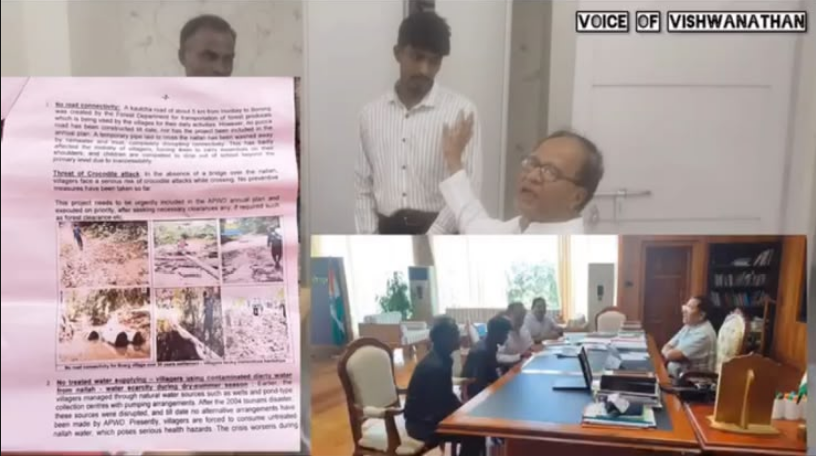
A letter bearing reference number 10/MP-ANI/2025/347, dated September 12, 2025, was addressed by MP Bishnu Pada Ray to the Chief Secretary, Andaman and Nicobar Administration.
The subject of the representation specifically referred to the urgent redressal of basic infrastructure and welfare issues in Borang Village, Ward No. 12, under Mayabunder Gram Panchayat.
Copies were also marked to the Prime Minister and Union Home Minister for urgent intervention and necessary directions.
The letter identified several issues requiring departmental action and specifically referred to APWD, Education, Health and BSNL/IT.
The MP's representation was not merely a general request for development. It contained photographs and descriptions of the conditions faced by the residents.
1. Five kilometres of kutcha road, followed by a dangerous forest crossing
The MP's September 2025 letter stated that a kutcha road of approximately five kilometres from Horibay to Borang had been created by the Forest Department for transportation of forest produce.
However, according to the representation, no pucca road had been constructed, nor had the project been included in the APWD annual plan.
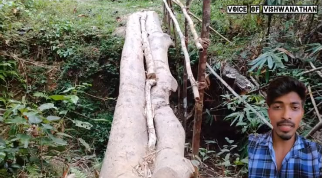
A temporary pipe arrangement used for crossing a nallah had reportedly been washed away by rainwater and mud, disrupting connectivity.
The letter also highlighted the dangers faced by villagers while crossing the water channel, including the reported threat of crocodile attacks.
Photographs attached to the representation showed residents negotiating difficult terrain and using temporary arrangements to cross water channels.
The problem has implications beyond transportation.
When access routes become unusable, residents face difficulties carrying essential supplies, reaching medical services and travelling for education. The MP's letter specifically raised concerns about children being unable to continue their education beyond the primary level because of accessibility problems.
For a settlement separated from the main area of Mayabunder by difficult terrain, a safe and dependable crossing is an essential requirement.
2. Drinking water: The Jal Jeevan Mission coverage question
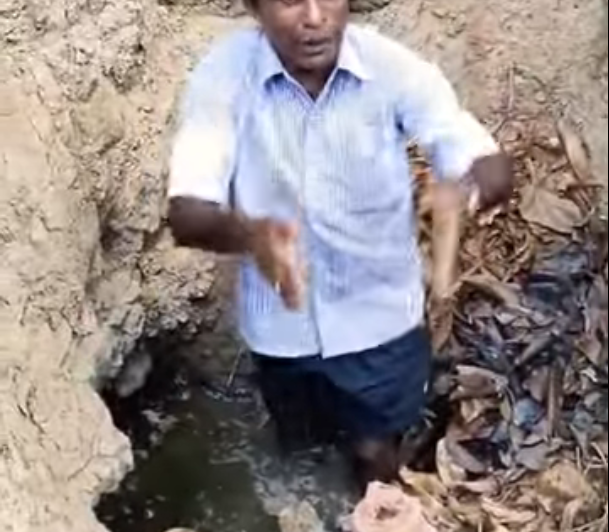
One of the most serious concerns raised in the MP's representation was the absence of a safe and dependable drinking water supply.
The letter stated that traditional water sources, including wells and pond-type collection centres, had been disrupted following the 2004 tsunami.
It further alleged that no adequate alternative arrangements had subsequently been made and that residents were compelled to collect untreated water from a nallah.
Photographs attached to the MP's letter showed villagers collecting water directly from a natural water channel.
The representation also raised an important question concerning the reported 100% Har Ghar Jal coverage of the Union Territory under the Jal Jeevan Mission.
The MP questioned how such coverage could be reported when residents of Borang were still dependent on untreated water sources.
This is a significant public accountability issue. However, the letter's allegation of misleading reporting should not be treated as an established finding without examining the official village-wise coverage records, functional household tap connections and water-quality data.
The present position, according to the information received for this report, is that the drinking water problem remains unresolved.
In March 2026, a six-month timeline was reportedly indicated for the construction of a water tank near Government Primary School, Borang.
Whether the proposed tank was sanctioned, constructed, commissioned and connected to a reliable water source requires confirmation from APWD and the concerned authorities.
A water tank alone would not resolve the issue unless a sustainable source, treatment arrangements and regular distribution are ensured.
3. School renovation: An improvement after the earlier complaint
The MP's September 2025 letter described the Government Primary School building at Borang as being in a dilapidated condition and requiring urgent repair and renovation.
It also referred to two teachers' quarters that were reportedly damaged beyond use because of a lack of maintenance.
According to the representation, teachers were staying in rented accommodation at Mayabunder and travelling on foot for more than five kilometres daily to attend the school.
The MP had recommended the construction of two prefabricated model staff quarters.
The school, established in 1989, has since been renovated, according to the latest information received.
This is an important development and should be acknowledged as progress.
However, the broader question of access to education remains. A renovated primary school cannot, by itself, address the difficulty faced by children who need to travel outside the settlement to pursue education beyond the primary level.
Road connectivity and the safety of the route remain directly connected to educational access.
The status of the proposed staff quarters also requires clarification.
4. Healthcare: Monthly medical visits, but what about emergencies?
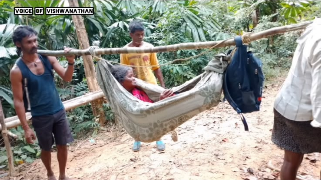
The MP's 2025 representation stated that Borang did not have a dispensary and that regular medical teams were not visiting the village.
It recommended establishing a primary health sub-centre or small dispensary and arranging regular medical camps.
The situation has reportedly improved to some extent.
According to information received for this report, a medical team now visits Borang once every month.
This is a positive development compared with the situation described in the September 2025 letter.
Nevertheless, monthly medical visits are not equivalent to a permanent healthcare facility.
The village's difficult geographical access raises a more fundamental concern: how can a patient requiring urgent treatment be transported when the route involves forest trekking and a potentially dangerous nallah crossing?
The administration needs to clarify the emergency medical response arrangement, the availability of transport and the feasibility of providing more regular healthcare services.
5. Mobile connectivity: A village still struggling to connect
The MP's letter also highlighted extremely poor mobile network connectivity.
In the present circumstances, network coverage is not simply a convenience. It is directly connected to emergency communication, access to government services, education, banking and healthcare.
For a settlement situated deep inside forest terrain, the absence of reliable communication can further isolate residents when an emergency occurs.
The MP had urged coordination with service providers to extend network coverage.
The issue continues to be among the concerns raised by residents.
6. PMAY houses: Pucca homes, but no corresponding infrastructure
One of the interesting aspects of the MP's representation was the comparison between the housing conditions before and after 2022.
The attached photographs showed earlier houses in Borang and houses subsequently constructed under the Pradhan Mantri Awas Yojana with support from Central Government funds.
The photographs demonstrated an improvement in housing conditions.
However, the MP argued that providing pucca houses without ensuring supporting infrastructure left residents facing the same fundamental difficulties.
A house may be constructed, but residents still require a safe road to reach it, potable water for daily consumption, electricity and street lighting, healthcare access and communication facilities.
The housing improvement therefore raises a wider development question: are infrastructure and welfare interventions being planned together for remote settlements, or are individual schemes being implemented without adequate coordination?
December 13, 2025: Official grievance programme reaches Borang
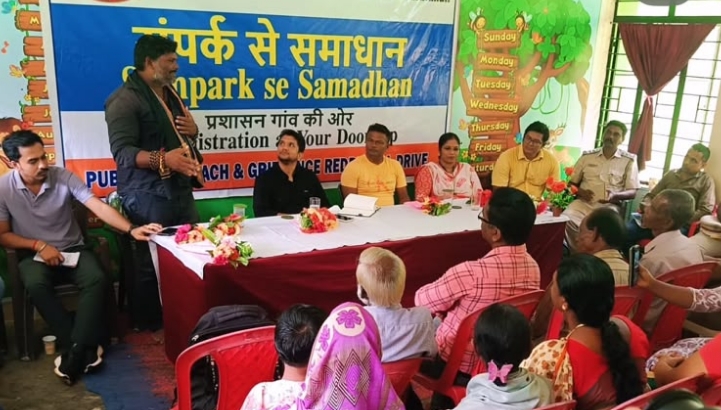
An important development in the administrative history of the village was the Public Grievance Redressal Programme organised at Government Primary School, Borang, on December 13, 2025, under the initiative Sampark Se Samadhan – Prashashan Gaon Ki Ore.
According to a report published by Andaman Chronicle on December 15, 2025, the programme was chaired by Shri Sushant Padha, IAS, Deputy Commissioner, North and Middle Andaman.
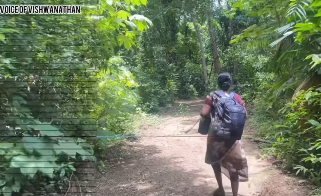
The Deputy Commissioner and a team of officers from various line departments undertook a trek of approximately one and a half hours through dense forest and uneven terrain to reach the village.
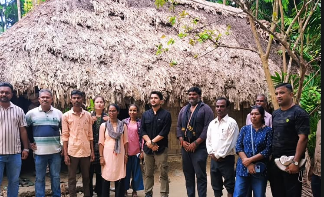
The published report stated that residents raised several civic and developmental grievances before the officials. It further reported that certain issues were addressed immediately, while matters requiring inter-departmental coordination or higher-level approval were noted for follow-up.
The report estimated the village population at approximately 130, including children.
This official outreach is significant because it establishes that the district administration had directly engaged with the residents and their grievances.
It also demonstrates that the remoteness of the village is recognised as a practical administrative challenge. However, the effectiveness of such outreach must ultimately be assessed by what happens after officials return from the field.
March 2026: Officials discuss measures and timelines
The matter was raised again in March 2026 when Vishwanathan, accompanied by Saw Phuthu, Roshni, Mayabunder Pradhan Chitra Velu and Meena Kumari, met the Deputy Commissioner, North and Middle Andaman.
The Deputy Commissioner arranged a meeting attended by the DFO, Mayabunder Range, Assistant Engineer of APWD, Tehsildar, Assistant Commissioner and other concerned government officials.
During the meeting, the villagers pointed out that the proposed bridge across the seasonal streams remained pending despite the earlier direction issued during the Deputy Commissioner's January visit.
Several other issues were also discussed, with specific timelines reportedly indicated for different interventions.
The measures and timelines discussed included:
Road improvement: Levelling of the existing kutcha road using an excavator within seven days.
Settlement-related issues: The Director of Revenue was reportedly given 15 days to address the settlement concerns of the 32 families.
Drinking water: A period of six months was indicated for providing a water tank near Government Primary School, Borang.
These timelines raised expectations among the villagers that the long-pending issues would finally receive concrete attention.
Some work undertaken, but essential facilities remain pending
Since the earlier interventions, certain developments have taken place in the village.
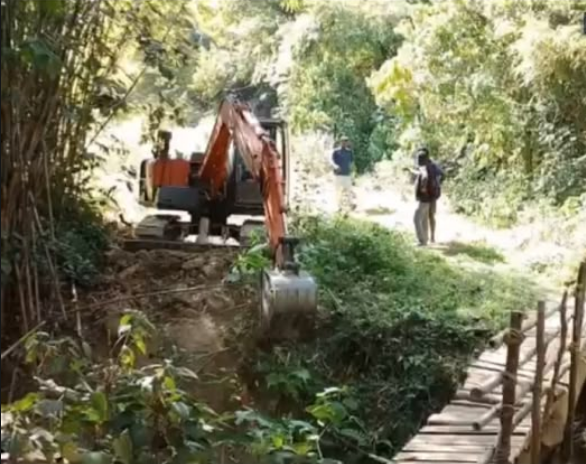
The Government Primary School has been renovated. The approach pathway was also levelled using an excavator as part of the road improvement measures.
However, villagers report that subsequent rainfall damaged the levelled pathway, affecting the improvement made earlier.
A medical team also visits Borang Village every month, providing periodic medical outreach to the remote settlement.
Despite these developments, several major requirements remain unresolved.
The drinking water problem continues, while permanent road connectivity, a proper bridge across the nallahs, settlement-related issues and streetlight facilities remain among the outstanding concerns. Reliable mobile network connectivity is another issue raised by the residents.
The monthly medical visits are a significant form of outreach, but the difficult access to the village continues to present challenges, particularly when residents require urgent medical assistance.
October 30, 2026: Borang's grievance reaches the Lieutenant Governor
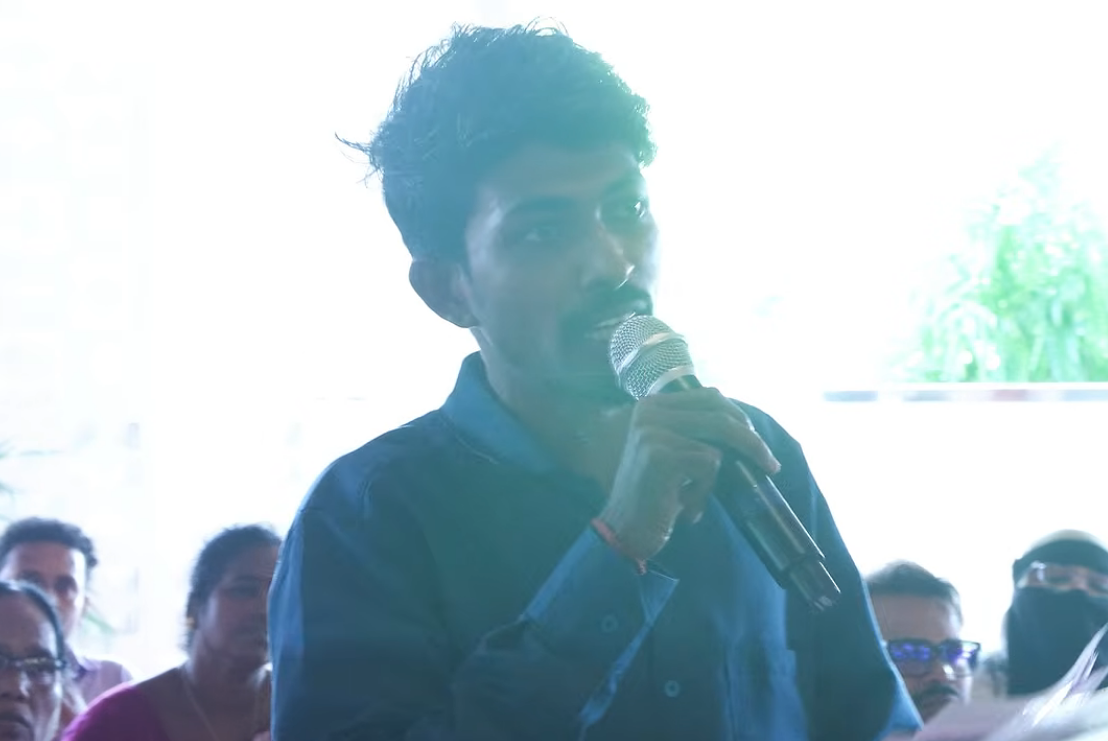
After pursuing the matter through various administrative channels and repeatedly raising it in the public domain, K. Vishwanathan presented the grievance directly before the Lieutenant Governor during the Janta Darshan on October 30, 2026.
Explaining the background, he referred to the historical government settlement and stated that the residents had still not received several basic facilities despite the passage of decades.
He specifically highlighted the absence of road connectivity, mobile network coverage, drinking water and medical facilities.
Responding to the grievance, Ms. Purva Garg, IAS, Deputy Commissioner, South Andaman, informed the Lieutenant Governor that the survey of Borang Village was still pending.
She stated that she had spoken with the Deputy Commissioner, North and Middle Andaman, who had informed her that the survey was expected to be completed within approximately three weeks to one month.
She also informed the Lieutenant Governor that additional personnel had been sent to Mayabunder to assist with the process.
Following this, the Lieutenant Governor indicated that the matter should be taken up in Mayabunder in December.
The Deputy Commissioner, South Andaman, further stated that her response was based on the information received from the Deputy Commissioner, North and Middle Andaman.
The Member of Parliament also intervened during the interaction, highlighting that the village was established through government settlement around 50–60 years ago. He pointed out that although a school had been constructed, proper road connectivity and drinking water facilities were still lacking.
The question is no longer whether the grievance has been heard
Borong's grievance has travelled through several levels of administration over the past three years.
It was first raised before the Deputy Commissioner in 2023, subsequently taken to the Member of Parliament in 2025, forwarded to the Chief Secretary through a letter dated September 12, 2025, and referred to the district administration and concerned departments.
The December 2025 public grievance programme brought officials directly to the settlement. The Deputy Commissioner's subsequent visit in December 2025 and the multi-departmental meeting in March were further opportunities to address the concerns.
The latest representation before the Lieutenant Governor has now brought the issue to the highest level of the Union Territory administration.
Some improvements have taken place. The school has been renovated, the approach pathway was levelled, and monthly medical outreach is reportedly being provided. These developments deserve acknowledgement.
But the fundamental concerns remain: dependable road connectivity, safe crossings over seasonal streams, safe drinking water, settlement-related clarity, streetlights, reliable mobile connectivity and arrangements for medical emergencies.
The survey timeline communicated during the Janta Darshan and the proposed December follow-up in Mayabunder now provide the next administrative milestones.
The administration must clarify what the pending survey is intended to establish, which department is responsible for each unresolved issue, what work has been sanctioned and when residents can expect measurable results.
For the 32 families of Borang, another round of meetings or assurances will not be enough. They need solutions that remain in place after the next rainfall and continue to function when an emergency occurs.
For a settlement whose first government allotments date back to 1974, access to safe roads, drinking water and essential public services should not remain a question passed from one office to another.